Die nächsten fünf Jahre für Primärbatterien: Warum ein breiter Betriebstemperaturbereich sich von einem Bonusmerkmal zu einem Muss entwickelt
Driven by the dual forces of the global energy transition and the continued proliferation of smart devices, the primary lithium battery market is undergoing a profound value restructuring. Underlying this steady growth, performance across a wide temperature range is rapidly evolving from a dddhhhnice-to-havedddhhh feature into a dddhhhmust-havedddhhh requirement for market entry.
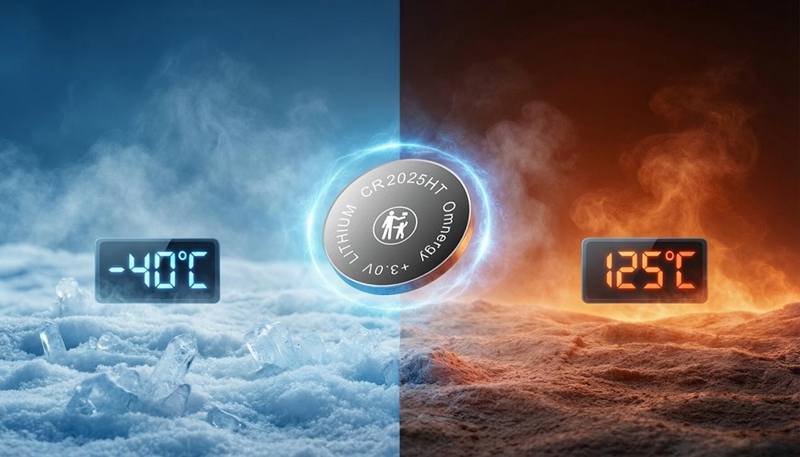
The global market for primary lithium batteries has been expanding steadily in recent years. Power Glory—a key supplier of power solutions for micro-electronic systems—has observed that as application scenarios shift from consumer electronics toward industrial and automotive-grade sectors, the demand for battery reliability in extreme temperatures has risen sharply. Conventional CR-series coin cells typically operate within a range of -20°C to 70°C; while this sufficed for the era of consumer electronics, it falls short in emerging applications such as automotive electronics, outdoor IoT devices, and industrial sensors. When temperatures exceed this standard range, internal resistance spikes and discharge efficiency drops precipitously...
In recent years, my country's lithium battery exports have shown a marked trend of simultaneous growth in both volume and value, with the growth rate of export value outpacing that of volume—a clear indication of the rising share of high-end products. For conventional primary lithium battery products to maintain their market share internationally, they must compete head-to-head with overseas brands on technical specifications, and the ability to operate across a wide temperature range is the most critical arena for this competition.
The shift of wide-temperature-range performance from a dddhhhvalue-adddddhhh to a dddhhhmust-havedddhhh is driven by the concerted momentum of multiple end-market sectors. Fueled by the robust demand from the three key application areas—new energy vehicles, industrial IoT, and energy storage—temperature adaptability has become a non-negotiable, critical requirement.

TPMS (Tire Pressure Monitoring System) units in new energy vehicles represent one of the most typical application scenarios for wide-temperature-range batteries. TPMS sensors mounted inside tires must function reliably in the extreme cold of Northeast China—where temperatures can drop to -40°C—while also withstanding internal tire temperatures reaching up to 125°C during high-speed summer driving.
The Industrial Internet of Things (IIoT) presents challenges of a different dimension. From all-weather outdoor traffic monitoring sensors and structural health monitoring equipment on bridges exposed to scorching summer sun, to electronic tracking terminals used in warehousing and logistics in frigid regions, devices must operate reliably across an exceptionally wide temperature range.

Furthermore, as global installed capacity for renewable energy continues to grow, the demand for wide-temperature-range batteries for energy storage systems is accelerating. Since outdoor energy storage systems operate in environments ranging from extreme cold to intense heat, performance across a wide temperature range directly determines their availability and lifespan.
Technological Innovation at Power Glory
From a technical perspective, the development of Power Glory’s wide-temperature-range batteries goes beyond simple formula adjustments; it entails a series of systematic innovations, including electrolyte optimization, electrode material modification, and sealing structure design.
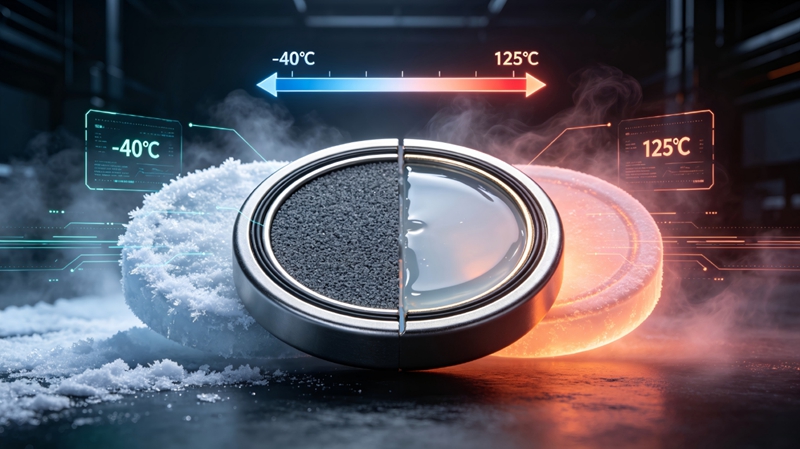
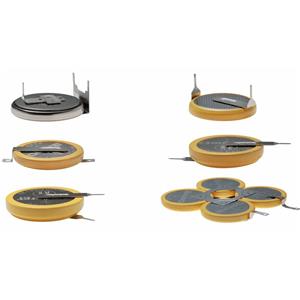
We have established a solid technical foundation in the field of wide-temperature-range applications. Our proprietary CR-HT series lithium-manganese coin cells feature an ultra-wide operating temperature range of -40°C to 125°C, with a high-temperature performance degradation rate below the industry average and an annual self-discharge rate of less than 1%.
For Power Glory, this represents both a challenge and an opportunity.
In the past, wide-temperature-range batteries were merely a dddhhhplusdddhhh—a technical credential for a select few high-end products. Today, however, smart devices have penetrated every corner of the globe—from the freezing snowy plains of the north to the scorching equatorial regions, and from highways bustling with traffic to the interconnected smart factories of the IoT era.
Looking back from the present moment, the shift of wide-temperature capability from an optional advantage to an essential requirement is undeniable. For Power Glory, this presents both a challenge and an opportunity.